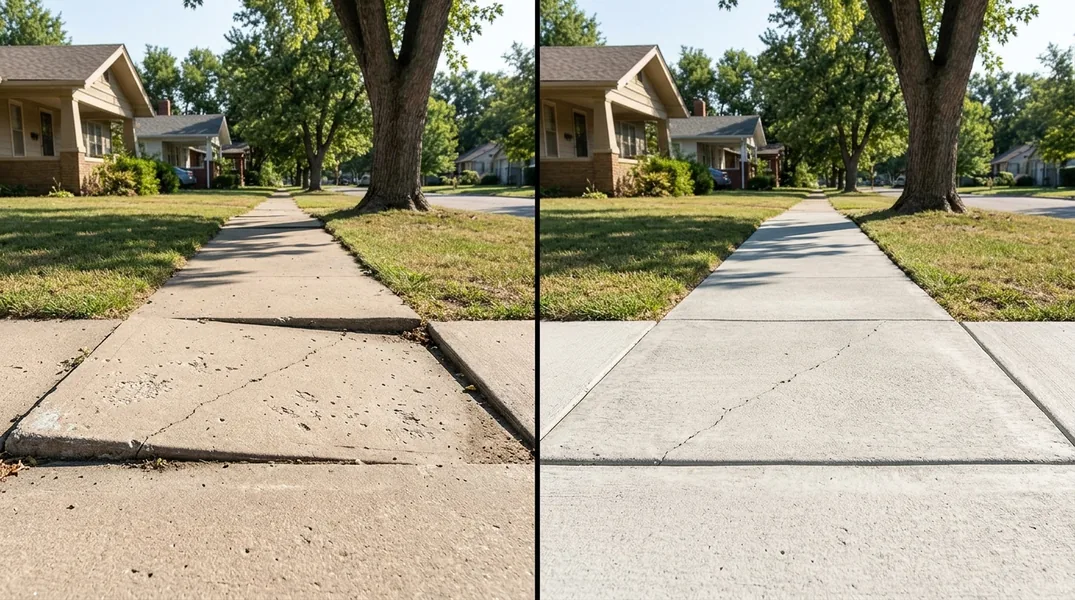
Understanding Wichita's Soil: Why Clay Is Concrete's Enemy
Wichita sits in the heart of Kansas, where clay soil dominates the landscape. Unlike sandy or loamy soil that drains predictably, clay is dense, heavy, and prone to significant movement. When clay absorbs moisture, it expands; when it dries, it shrinks dramatically. This constant cycle of shrink-swell soil concrete damage is one of the primary reasons homeowners in Wichita experience premature cracking in their driveways and patios.
Your concrete driveway sits directly on this unstable foundation. Even a professionally installed slab cannot remain perfectly rigid when the ground beneath it is constantly shifting. The clay soil pushes up unevenly during wet seasons, then pulls away during dry spells. This differential movement puts immense stress on the concrete, causing it to crack, settle, and eventually fail. Understanding this geological reality is the first step toward protecting your investment and knowing when Concrete Repair & Resurfacing becomes necessary.
The Freeze-Thaw Cycle: Winter's Impact on Your Driveway
Kansas winters are unpredictable. Temperatures can swing from freezing to above 40 degrees Fahrenheit within a single week, and this rapid fluctuation is devastating to concrete. When water seeps into small cracks and pores in your driveway, it freezes during cold nights. As ice forms, it expands with tremendous force, pushing the concrete apart from the inside. When temperatures rise, the ice melts and water drains away, leaving the crack slightly larger than before. This freeze-thaw concrete damage Kansas homeowners face is cumulative, meaning each winter cycle makes existing damage progressively worse.
The problem intensifies when clay soil is involved. Moisture moves more slowly through clay than through other soil types, meaning water can remain trapped beneath your concrete for extended periods. This creates ideal conditions for freeze-thaw damage to develop rapidly. A small hairline crack that appears in fall can become a significant structural problem by spring. If you notice new cracks developing after winter, freeze-thaw damage is likely the culprit, and addressing it promptly can prevent much costlier repairs down the road.
Clay Soil Concrete Cracking: Common Patterns and Warning Signs
Not all concrete cracks look the same, and the pattern your driveway develops can tell you a lot about what's happening beneath the surface. Clay soil concrete cracking in Wichita typically appears as alligator cracking, where the surface breaks into a network of small, interconnected cracks resembling an alligator's skin. This pattern indicates that the ground below is moving unevenly, pushing and pulling different sections of your driveway in different directions. You might also see linear cracks running across the slab, often at regular intervals, which suggest that the soil is settling uniformly but causing stress points in the concrete.
Other warning signs include concrete that has heaved or settled, creating lips where one section of driveway is higher than an adjacent section. Potholes and spalling (where chunks of concrete break away) are also common in Wichita driveways, especially after winter. If water is pooling on your driveway or you notice the surface is no longer level, the underlying soil movement is likely at fault. These issues won't resolve themselves and will only worsen without professional intervention. The sooner you identify these signs, the sooner you can take action to prevent catastrophic failure.
How Proper Installation Mitigates Soil and Weather Challenges
Professional installation of Concrete Driveways accounts for Wichita's unique soil and climate conditions. Experienced contractors prepare the base properly by removing unstable clay, adding gravel or recycled asphalt base, and compacting everything to create a stable foundation. They also ensure proper drainage so water doesn't accumulate beneath the slab. Additionally, they incorporate control joints at regular intervals, which are intentional weak points that allow the concrete to crack in a controlled, predictable manner rather than randomly throughout the slab.
The concrete mix itself matters too. Contractors in Wichita often use air-entrained concrete, which contains tiny air bubbles that allow the material to expand and contract slightly without breaking. They also typically add reinforcement like rebar or wire mesh to help hold the concrete together if movement does occur. The thickness of the slab, the slope for drainage, and even the timing of the pour relative to weather conditions all play crucial roles in how well your driveway will withstand clay soil and freeze-thaw cycles. This is why choosing an experienced local contractor who understands Wichita's specific challenges is so important.
When to Call for Concrete Repair Near Me: Signs You Need Professional Help
If you're already seeing signs of damage, waiting won't make it better. Small cracks can be sealed to prevent water infiltration, but once the damage becomes extensive, your options become more limited and expensive. If you have cracks wider than one-quarter inch, visible settlement, or spalling, it's time to contact a professional. Many homeowners delay calling because they're uncertain about the cost, but ignoring the problem only guarantees that repair expenses will grow. A small crack sealed today costs far less than replacing an entire driveway in five years.
Wichita Concrete specializes in identifying and addressing concrete damage caused by local soil and weather conditions. Whether your driveway needs minor repairs or complete resurfacing, we can assess the damage, determine the underlying cause, and recommend the most cost-effective solution. We understand how clay soil and freeze-thaw cycles damage concrete, and we know how to repair it properly so it lasts. If you're concerned about your driveway, don't wait for the problem to worsen. Call us at (316) 368-4872 or visit our website to request a free estimate today.
Protecting Your Investment: Maintenance and Long-Term Solutions
Once you've had your concrete repaired or installed, ongoing maintenance is critical in Wichita's climate. Seal your driveway every two to three years to prevent water from penetrating the surface. This simple step dramatically reduces the rate at which freeze-thaw damage occurs. Keep your driveway clean and free of debris that can trap moisture. During winter, use sand or kitty litter for traction instead of rock salt, which can accelerate concrete deterioration. In spring, inspect your driveway for new cracks and seal them immediately before they have a chance to grow.
For homeowners dealing with persistent problems, alternative solutions exist beyond traditional concrete repair. Stamped & Decorative Concrete can be installed with modern techniques and materials that better resist clay soil movement. Some homeowners also explore permeable concrete options that allow water to drain through the surface rather than accumulating beneath it. Whatever approach you choose, the key is addressing the problem rather than ignoring it. Wichita Concrete can discuss all your options and help you select the best solution for your home and budget. Reach out today to learn more about protecting your concrete from Wichita's challenging soil and weather conditions.
Looking for a professional concrete contractor in Wichita? Wichita Concrete responds fast for all your concrete needs.
Get a Free QuoteOur services: Concrete Driveways · Concrete Patios · Stamped & Decorative Concrete