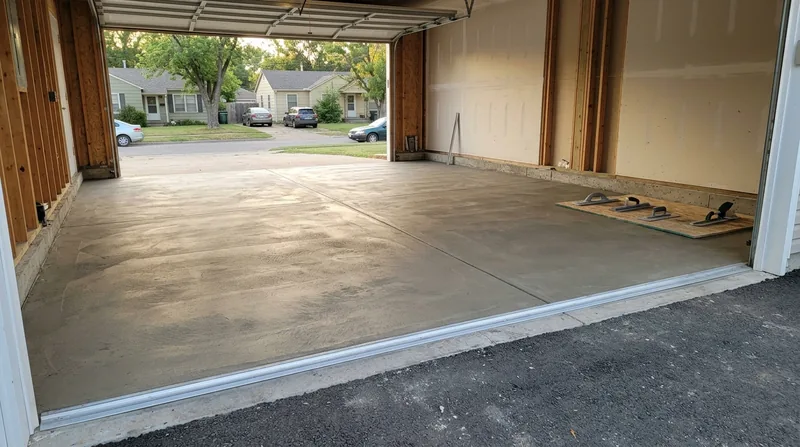




Garage floors in Wichita take a beating from the freeze-thaw cycle, oil stains, and the daily wear of vehicles and tools. Wichita sits on sandy alluvium near the Arkansas River and clay-rich soils farther out, with dozens of freeze-thaw cycles each winter and summer highs near 100 degrees Fahrenheit. A properly poured and finished concrete garage floor resists cracking, seals against moisture and oil, and holds up for decades if installed right and maintained. We pour level, crack-resistant slabs with smooth trowel or broom finishes, then seal them to protect against the Wichita climate and everyday damage. Whether you need a new floor for a post-war ranch in Midtown, a replacement for a 1970s split-level in west Wichita, or a garage floor addition for one of the newer brick-and-siding homes in Andover or Reflection Ridge, we handle the subgrade compaction, air-entrained mix design, and proper jointing that keeps flatwork sound in this climate.
Why Garage Floors Matter in Wichita's Freeze-Thaw Climate
Wichita winters bring ice storms, de-icing salt, and repeated freeze-thaw cycles that scale and spall unprotected concrete. Spring severe weather and summer heat speed concrete set times and stress new slabs. A sealed, properly jointed garage floor resists these forces and keeps oil, moisture, and salt from penetrating the slab. Without sealing and good subgrade prep, even a well-poured floor will crack and spall within five to ten years in Wichita's climate. The difference between a floor that lasts 20 years and one that fails in a decade is subgrade compaction, air-entrained concrete, correct jointing, and regular resealing.
- We compact subgrade soil to eliminate settlement and heave that cracks concrete joints.
- We use air-entrained concrete mixes that survive freeze-thaw cycles without spalling.
- We space control joints every 4 to 6 feet to direct cracks where you can't see them.
- We seal the finished floor with a penetrating sealer to repel oil, moisture, and de-icing salt.
- We finish to a smooth trowel or broom texture that resists slipping and wears evenly.
A properly sealed and jointed garage floor in Wichita will stay crack-free and stain-resistant through two decades of Wichita winters and summer heat.
Key info: Wichita's shallow water table and clay-rich soils mean moisture rises through concrete. We specify moisture barriers and seal the underside of slabs in high-risk areas to prevent damp garage floors that stain and fail faster. Ask us about vapor barriers on your free estimate at (316) 368-4872.
For more detail on how concrete holds up under pressure, see our concrete slabs and foundations page.
How We Pour and Finish Garage Floors in Wichita
A garage floor starts below ground. We excavate to the correct depth, remove soft or unstable soil, and compact the subgrade in 4-inch lifts with a plate compactor. On clay soils, we may add sand or gravel to improve drainage and reduce heave. We then set forms, pour air-entrained concrete at the right slump for Wichita's climate and temperature, and finish the surface to your choice of smooth trowel or broom texture. Proper subgrade preparation and concrete mix design prevent the cracks and heave that plague garages across Wichita's older east and south sides, the post-war ranches of Planeview, and the newer developments in Goddard and Bel Aire.
- We excavate and compact subgrade soil to 95 percent standard proctor density.
- We set forms and establish the correct slope for water drainage away from the garage.
- We pour air-entrained concrete and finish to smooth trowel or broom texture per your preference.
- We cut control joints every 4 to 6 feet to manage shrinkage cracks.
- We apply penetrating sealer after the concrete cures to lock in durability.
This process takes 2 to 4 days from excavation to sealed, cured floor, depending on slab size and weather.
Example: A homeowner in Crown Heights near Wichita State had a 1930s Craftsman bungalow with a cracked, heaving garage floor from poor subgrade prep 30 years ago. We removed the old slab, properly compacted the clay soil, poured a new 4-inch slab with air-entrained mix and 5-foot control joints, and sealed it. Five years later, the floor is flat and stain-free. That's the difference proper technique makes.
Learn more about our concrete repair and resurfacing services for existing damaged floors.
| Approach | Description | Best for |
|---|---|---|
| New Pour on Prepared Subgrade | Excavate, compact, and pour new 4-inch air-entrained slab with control joints and sealer. | New construction, additions, or complete replacement of failed floors. |
| Smooth Trowel Finish | Hand-troweled surface that is smooth, easy to sweep, and resists dirt and stain retention. | Homeowners who want a polished, low-maintenance appearance. |
| Broom Finish | Textured surface created by dragging a broom across wet concrete for slip resistance. | Garages where traction matters, especially in winter or with heavy equipment. |
| Replacement of Heaving or Cracked Floors | Remove old slab, address subgrade issues (clay heave, poor compaction), and pour new floor. | Older Wichita homes where original floors were poorly installed or have settled over decades. |
| Sealed and Protected Finish | Penetrating sealer applied after cure to resist oil, moisture, salt, and UV damage. | All Wichita garage floors to extend life and maintain appearance through freeze-thaw cycles. |
Garage Floors Cost in Wichita: What to Expect
Garage floor cost in Wichita starts at approximately $5 per square foot for a straightforward new pour on prepared subgrade, which translates to $1,200 to $2,000 for a typical single-car garage of 240 to 400 square feet. A two-car garage typically runs $2,400 to $4,000. The final price depends on subgrade condition, soil type, slab thickness, finish choice, and whether you need removal of an old floor. Wichita's clay soils and freeze-thaw climate often require deeper excavation, better compaction, and moisture barriers, which add cost but prevent expensive failures later. Getting 2 to 3 estimates from insured contractors ensures you understand what's included at each price point and can compare quality, not just the bottom line.
Factors that move the cost up include removal and disposal of an existing slab, poor or unstable subgrade that needs extra compaction or fill, a sloped or complex shape, thicker reinforcement for heavy equipment storage, and sealed or decorative finishes. A straightforward replacement in a newer subdivision like Reflection Ridge or Willowbend may cost less than a new pour on a 1970s home in west Wichita where the soil and existing conditions are less predictable. For a detailed breakdown of pricing and examples, see our full pricing overview.
Garage Floors Near Me: What Wichita Homeowners Should Know When Hiring a Concrete Contractor
Hiring the right concrete contractor for your garage floor means checking insurance, getting multiple estimates, and understanding what's included. Do not hire anyone who cannot provide a current certificate of general liability and workers' compensation insurance covering the job. Ask for references from recent garage floor projects in your neighborhood, whether College Hill, Riverside, Planeview, or the growing suburbs like Andover and Maize. Understand your local permit requirements: Wichita may require a permit for a new garage floor or major modification, especially if it affects drainage or utility lines. If you live in an HOA community like Reflection Ridge or Tallgrass, check covenants for restrictions on finish color or texture.
- Verify current insurance with a certificate of liability and workers' compensation on file.
- Get written estimates from at least two contractors that itemize materials, labor, and timeline.
- Ask for references from recent garage floor jobs completed in Wichita neighborhoods similar to yours.
- Check with the city or county for permit requirements and schedule inspections if required.
- Confirm the contractor understands Wichita's soil conditions and freeze-thaw climate.
- Discuss sealing and maintenance plans to protect your investment through Kansas winters.
A contractor who takes time to inspect your subgrade, explain the mix design, and discuss long-term protection is one worth hiring. Contact us for a free, no-obligation estimate and we'll walk you through the process and answer your questions about your specific site.
Garage Floors in Wichita: Pricing Guide
| Service | Price | Details |
|---|---|---|
| New Garage Floor Pour, Single-Car (240-300 sq ft) | Starting at $5/sq ft | Includes excavation, subgrade compaction, 4-inch air-entrained slab, control joints, smooth or broom finish, and penetrating sealer |
| New Garage Floor Pour, Two-Car (400-500 sq ft) | Starting at $5/sq ft | Same scope as single-car but larger area, cost per square foot holds steady on standard subgrade with no major soil issues |
| Replacement of Failed or Heaving Floor | Starting at $6.50/sq ft | Includes removal and disposal of old slab, remediation of unstable or clay subgrade, compaction, new pour, and sealer |
| Complex Subgrade or Soil Issues | On estimate | Wichita clay heave, shallow water table, or poor existing conditions require site inspection before pricing |
| Sealing and Maintenance | Starting at $1.50/sq ft | Resealing existing floors every 2 to 3 years to extend life and maintain stain resistance in Wichita climate |
| Free Estimate and Site Visit | No charge | Response within 24 hours at (316) 368-4872, includes soil assessment and written proposal with no obligation |
Indicative pricing, the exact cost depends on square footage, finish, and site access. Free personalized estimate within 24h at (316) 368-4872.


